
If your limited company pays for your mobile phone, it can usually claim the cost as a business expense.
The simplest approach is usually for the phone contract to be in the company’s name, with the monthly bills paid directly from the company bank account.
Where that’s the case, the company can generally claim the full cost without having to split business and personal use. In most cases, there is also no Benefit in Kind charge.
The key point is who the contract is with. That determines what your company can claim and whether any tax charges arise.
Mobile phone provided by the company
Most directors use a single mobile phone for both business and personal purposes.
HMRC provides a specific exemption for one mobile phone (or one SIM card) per employee. Provided the contract is between the mobile network and the company, the phone can be used for both business and private purposes without giving rise to a Benefit in Kind.
There’s no need to apportion business and personal use, even where private use is substantial.
This treatment applies to:
- The handset
- Monthly line rental or SIM-only contract
- Calls and text messages
- Mobile data
The critical point is that the contract must be in the company’s name.
HMRC’s guidance confirms this position for one mobile phone or SIM card per director or employee (see EIM21780).
What about personal phone contracts?
Many directors already have a personal mobile phone contract before setting up a limited company.
Once you’ve incorporated, your company can’t simply start paying your personal monthly bill.
As the contract is in your own name, any payments made by the company are normally treated as settling a personal expense. That can have tax and National Insurance consequences for both you and the company.
The exception is where you’ve incurred additional costs purely because of business use. Those extra costs can usually be reimbursed. In practice, unlimited call and data allowances mean there’s often little or nothing to reclaim.
If your contract is coming to an end, it’s often worth taking out a new one in the company’s name instead. That usually makes the tax position much simpler going forward.
Purchasing a handset outright
Instead of taking out a monthly contract, the company can buy a handset outright and pair it with a company SIM.
If you decide to go down this route, the handset is treated as a company asset. It will normally be recorded as a fixed asset on the company’s balance sheet and included in the fixed asset register until it is replaced, sold or otherwise disposed of.
The handset normally becomes a company asset and will usually be recorded in the company’s accounting records. Tax relief is generally available through the normal capital allowance rules where applicable.
What about accessories and other costs?
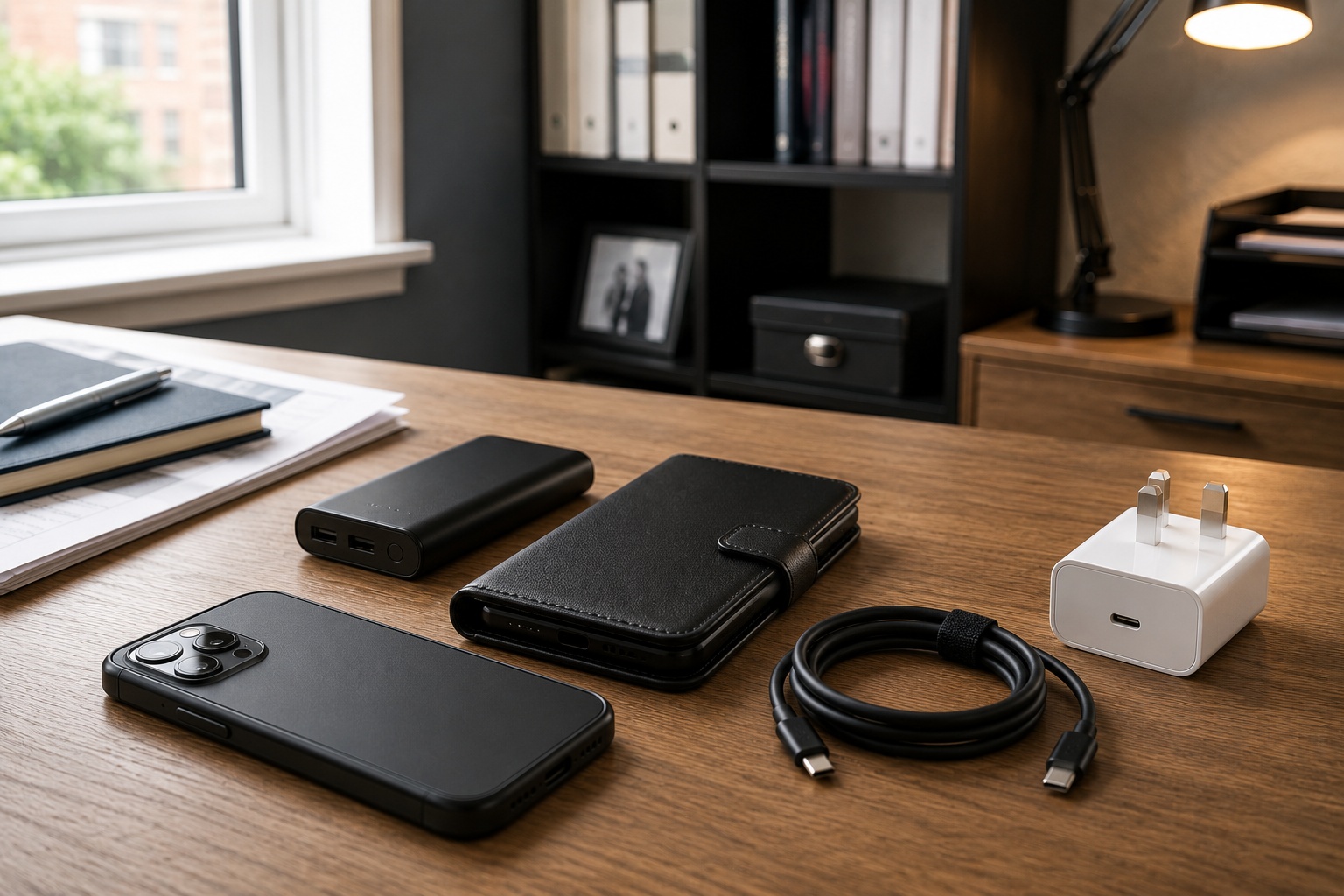
Your company can usually pay for accessories and related costs connected with a company phone, including:
- Protective cases
- Chargers and cables
- Headsets and hands-free kits
- Repairs and maintenance
- Insurance
As with any business expense, there should be a genuine business reason for the company meeting the cost.
Business telephone systems
Many businesses now rely on cloud-based phone systems (VoIP) rather than traditional landlines.
Monthly subscriptions, virtual phone numbers and other business telephony services are normally allowable business expenses.
Broadband costs are treated differently. The tax treatment depends largely on whether the connection was installed for the business or was already in place for personal use. Find out more in our dedicated broadband expenses guide.
Keep accurate records
Keep records to support any claim made by the company.
For company-provided phones, retain invoices and a copy of the contract showing it is in the company’s name. Where additional business costs are reimbursed under a personal contract, keep evidence of how those costs were identified and calculated.
Need more advice? Get in touch.
Mobile phones are just one of many expenses that can be claimed through a limited company. If you’re unsure what’s allowable, or would like advice on running your company tax-efficiently, we’re here to help!
Click here to get in touch with the Integro team.
You can also read our complete guide to limited company expenses.